T. J. McIntosh (1879–1953)
Country of Origin
Countries/Regions of Ministry
- United States
- Macau
- Hong Kong
- China
- Jerusalem
Traditions
Ministries
- Denominational leader
- Pastor
- Missionary
The first of many Azusa Street missionaries to China was T. J. McIntosh, with his
entire family in tow. This part of his story is said to have been told in his 1909
autobiographical booklet, The Life and Work of T. J. McIntosh and Wife and Little Girl, Around the World by
Faith.[1] Unfortunately, that booklet is not available, despite researchers' intense searches
for it, for over thirty years.
Thomas James McIntosh emerged from obscurity as a minister in the North Carolina Pentecostal
Holiness Church (PHC). He and his wife first spoke in tongues on December 31, 1906,
during the famed G. B. Cashwell revival in Dunn, NC. On his way to Los Angeles, McIntosh stopped at Memphis and was
convinced that local Chinese understood him speaking in “Chinese”. He went on to the
Azusa St. Mission and responded to a prophetic utterance of “Macau, Macau, Macau.”
After this encounter at the Azusa St. Mission, he consulted a reference librarian
and learned that Macau was a Portuguese island near Hong Kong.
McIntosh ultimately became the first Pentecostal missionary to reach Macau, Hong Kong,
and mainland China. Likely unknown to McIntosh, Robert Morrison had brought Protestant
Christianity to China nearly a century earlier, landing in Macau on September 4, 1807. With insecure funding and with only limited resources from the PHC in North Carolina
and William J. Seymour’s Azusa St. Mission, McIntosh took his entire family on the risky trip to Hong Kong.
They left port at San Francisco and arrived in Hong Kong on August 7, 1907. McIntosh
would push on to Macau and speak later that evening.
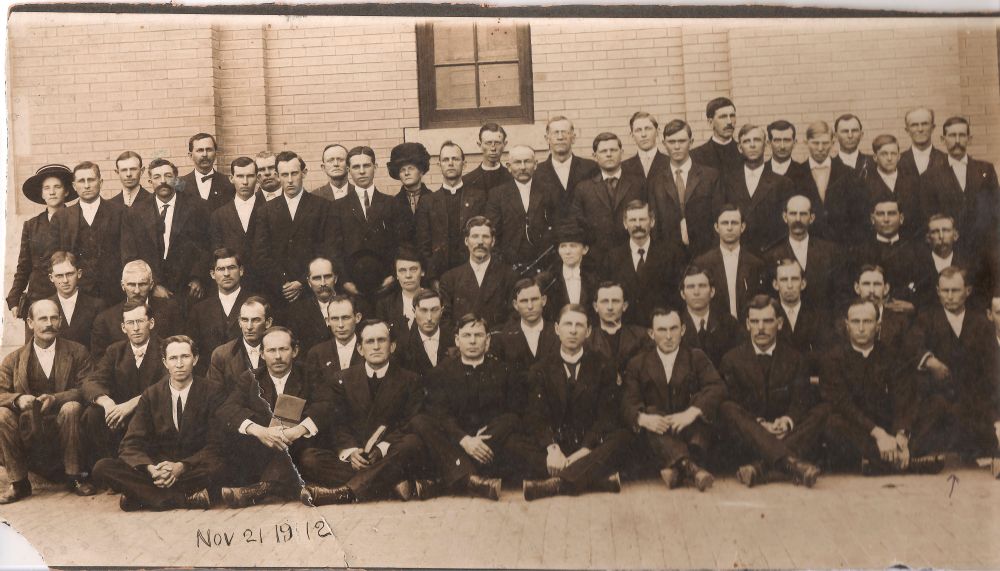
Fig. 1: Nov. 21, 1912. International Pentecostal Holiness Convention, NC. McIntosh
is seated, front row, farthest left.
He would return to Hong Kong and eventually go to Sainam in mainland China. One of
his greatest accomplishments was connecting with Mok Lai Chi, first as a translator, then as a partner in ministry. McIntosh’s limited education
meant his role in launching Mok’s magnificent Pentecostal Truths (which he named) is not obvious today. However, the first issue printed a picture
titled “Bro. McIntosh Vision”. This was a painting that shows a dove with a copy of
the Pentecostal Truths in its mouth, expressing that the publication of the newspaper originated from the
vision of McIntosh. Originals of this serial have been kept by the headquarters of
the True Jesus Church in Taiwan, a remarkable journey for the first Pentecostal periodical
published outside the USA.[2]
McIntosh's wife, Annie, ministered and fed the hungry in Macau.[3] Her sister, the wife of F. M. Britton, was prominent in the early years of the IPHC
(International Pentecostal Holiness Church).
McIntosh, however, soon discovered that his xenolalic Cantonese was not authentic
when trying to preach to locals. S. C. Todd, once connected to the CMA in the USA,
published this failure by McIntosh and others in the Baptist Argus magazine and elsewhere.[4] These developments were widely circulated, getting the attention of Cashwell, whose
Bridegroom Messenger moved from xenolalic initial-evidence to glossolalia as the sure sign of Spirit baptism.
This teaching would be made prominent in Pentecostal churches that joined the Pentecostal
Fellowship of North America in 1947.
McIntosh did not stay long on his first visit to East Asia; he left Macau in April
1908 and hurried on to Jerusalem. While there, he tested xenolalia in public again,
which failed. His visit was abbreviated, rescued by Azusa Street missionary Lucy Leatherman.
When McIntosh returned to China, in late 1909, his leadership style endangered the
stable missionary community left behind by Alfred and Lillian Garr. Mok Lai Chi had
no choice but to organize on Caine Road and attract another Azusa Street missionary,
Anna M. Deane. When IPHC (International Pentecostal Holiness Church) founder, J. H. King, came to Hong Kong in 1910-1911, he initially connected with Mok, but McIntosh led
him to Sainam, China. The Garrs, who had worked at the Oliver Gospel Mission in Columbia,
South Carolina, were also instrumental in getting King to visit China and India.[5] McIntosh would himself almost destroy a ministry built on dreams and visions, despite
the circle of committed workers, both international and local. He was back in Jerusalem
by 1911. After the birth of his son there, the family returned to the USA.
By 1913, he was disowned by the Pentecostal Holiness Church. McIntosh's next season
was spent working outside of church ministry, first in his native South Carolina,
then North Carolina. However, one obscure reference suggests he may have ministered
in a different Holiness Pentecostal church. After the death of T. J. McIntosh on February
5, 1953, in Kershaw, SC, Mrs. Sarah Britton published a moving tribute to the ministry
of both the McIntosh's and her
family.[6]
Ultimately, the fearless and passionate, yet haphazard, early ministry of T. J. McIntosh moved
him to far-flung parts of the world. Daniel Woods made this observation: "When McIntosh
encountered the power of the Holy Ghost, he did not allow his lack of money, education,
or experience to deter him. Fully trusting ‘the supply of the Spirit,’ he stormed
ahead when others hesitated.”[7]
Harold D. Hunter
Pentecostal-Catholic Dialogue USA
Notes
[1] The 1909 booklet was advertised as a preorder for the upcoming Falcon Camp Meeting
in The Apostolic Evangel 1, no. 13 (August 15, 1909): 4. Cf. “Some Good Tracts,” Bridegroom’s Messenger 5, no. 97 (November 1, 1911): 2.
[2] Pentecostal Truths has been digitized by the IPHC Archives Research Center at
https://pentecostalarchives.org/. The Chinese sections in this influential bilingual serial were translated by Connie
Au.
[3] Annie E. McIntosh, “Letter from China,”
Bridegroom’s Messenger 1, no. 6 (February 15, 1908): 1.
[4] S. C. Todd, “Some Sad Failures of Tongues in Mission Fields,” Baptist Argus 23 (January 1908), 1-2.
[5] Joseph E. Campbell, The Pentecostal Holiness Church: 1989-1948 (Franklin Springs: Publishing House of the Pentecostal Holiness Church, 1951), 347.
[7] Daniel Woods, “Failure and Success in the Ministry of T.J. McIntosh, the First Pentecostal
Missionary to China,”
Cyberjournal for Pentecostal-Charismatic Research 12 (January 2003).
http://pctii.org/cyberj/cyberj12/woods.html.
For Further Reading
- Tsui, Jackson. “The Life of the First Pentecostal Missionary to China.” Orientis Aura: Perspectives in Religious Studies 7 (July 28, 2025): 1-15, https://journals.usj.edu.mo/index.php/orientisaura/article/view/212. Housed at Xavier Centre for Memory and Identity, University of Saint Joseph, Macao.
- Woods, Daniel. “Failure and Success in the Ministry of T.J. McIntosh, the First Pentecostal
Missionary to China.” Cyberjournal for Pentecostal-Charismatic Research 12 (January 2003). http://pctii.org/cyberj/cyberj12/woods.html.
- Melton, J. Gordon. “Pentecostalism Comes to China: Laying the Foundations for a Chinese
Version of Christianity.” In Global Chinese Pentecostal and Charismatic Christianity: Asia Pacific Pentecostalism, ed. Fenggang Yang, Joy K. C. Tong, Allan Anderson. Boston: Brill, 2017, 43-62.
- Law, E. May. Pentecostal Mission Work in South China: An Appeal for Missions. Falcon, NC: The Falcon Publishing Co., n.d. [1st ed. c. 1915]. https://www.cogheritage.org/transformational-leader.html .
© 11/12/2026